How the parts fit together
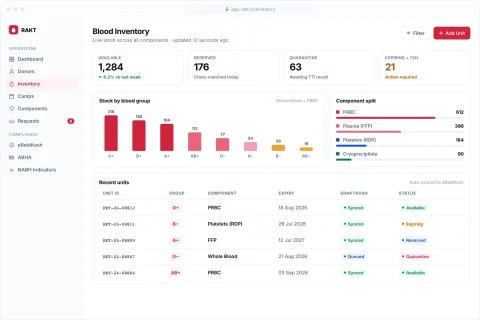
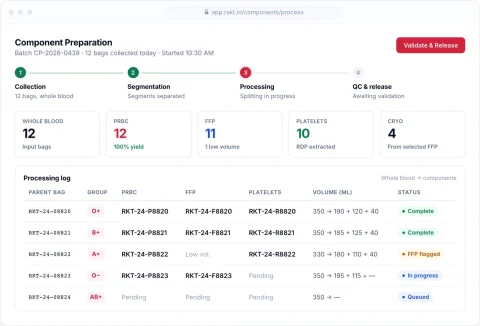
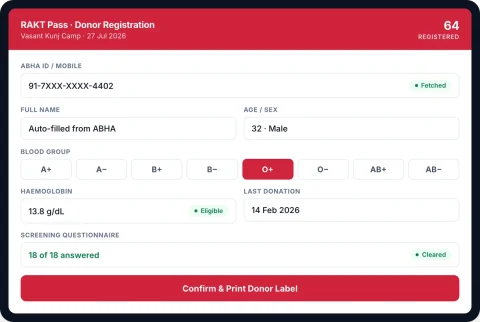
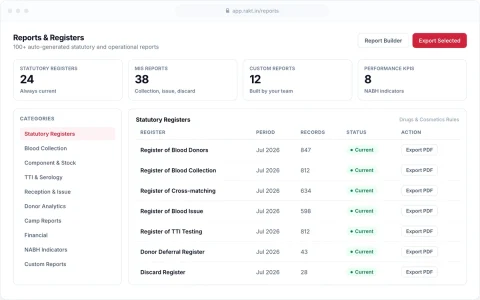
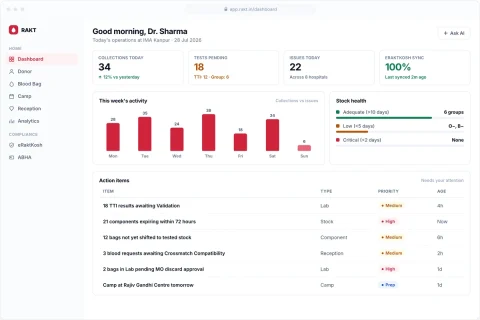
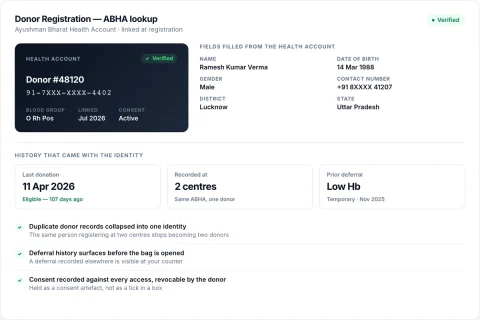
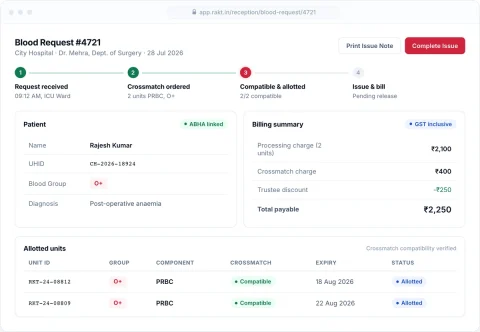
The eleven parts above are not eleven products. They are one path, and it is the path of a single bag of blood: a donor is registered and screened against their own deferral history, a bag is entered against them, the unit is grouped and tested, what comes back from the analyser decides whether it can move to tested stock, tested stock is separated into components, and a component is crossmatched and issued to a named patient. Every register a licensed centre has to produce is a view of that same path, which is why they can be generated rather than written.
The reason it matters that this is one path and not eleven modules is what happens at the gates. A unit that has not been tested cannot be issued, because the issue screen has no way to reach it — not because a policy says so. A reactive TTI result quarantines the unit and its components together. A donor deferred at one centre is deferred at every centre under the same licence. Software that stores these facts without enforcing them will demonstrate well and fail an assessment, and the difference is invisible in a feature list.
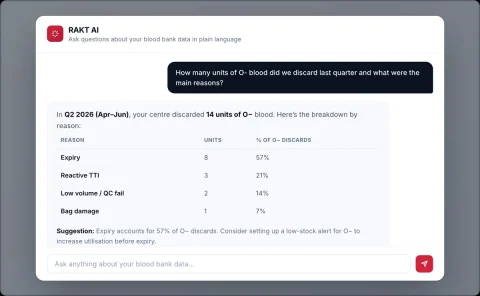
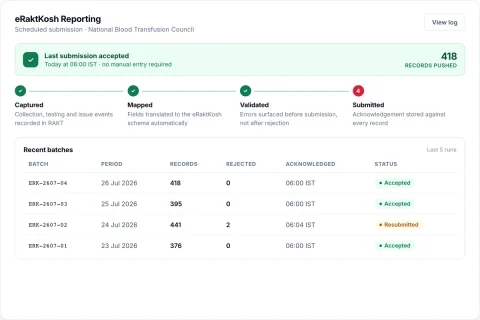
Almost no centre needs all of it in the first month, and it is worth being plain about the order. Bag Entry through Issue, with the statutory registers, is what replaces the paper and is where the whole benefit starts — a centre can run on that alone. Analyser integration is the next thing worth adding, because transcription is the one manual step whose errors are dangerous rather than inconvenient. eRaktKosh reporting follows from records that by then already exist. ABHA, the API, camps and RAKT AI are worth adding when there is a specific reason to, and not before: a module nobody has a use for is a screen staff learn to click past.
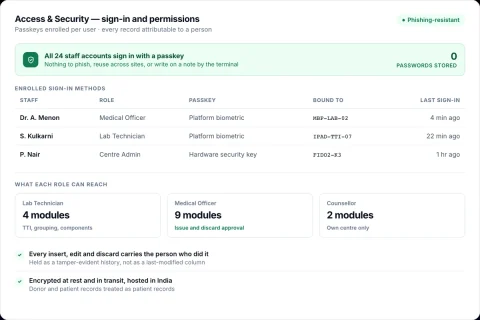
What none of the eleven do is make a clinical or a regulatory decision. A deferral, a discard, the release of a unit — those belong to a person who is accountable for them. The system’s job is to make sure the decision is recorded, attributed to whoever made it, and difficult to bypass quietly.